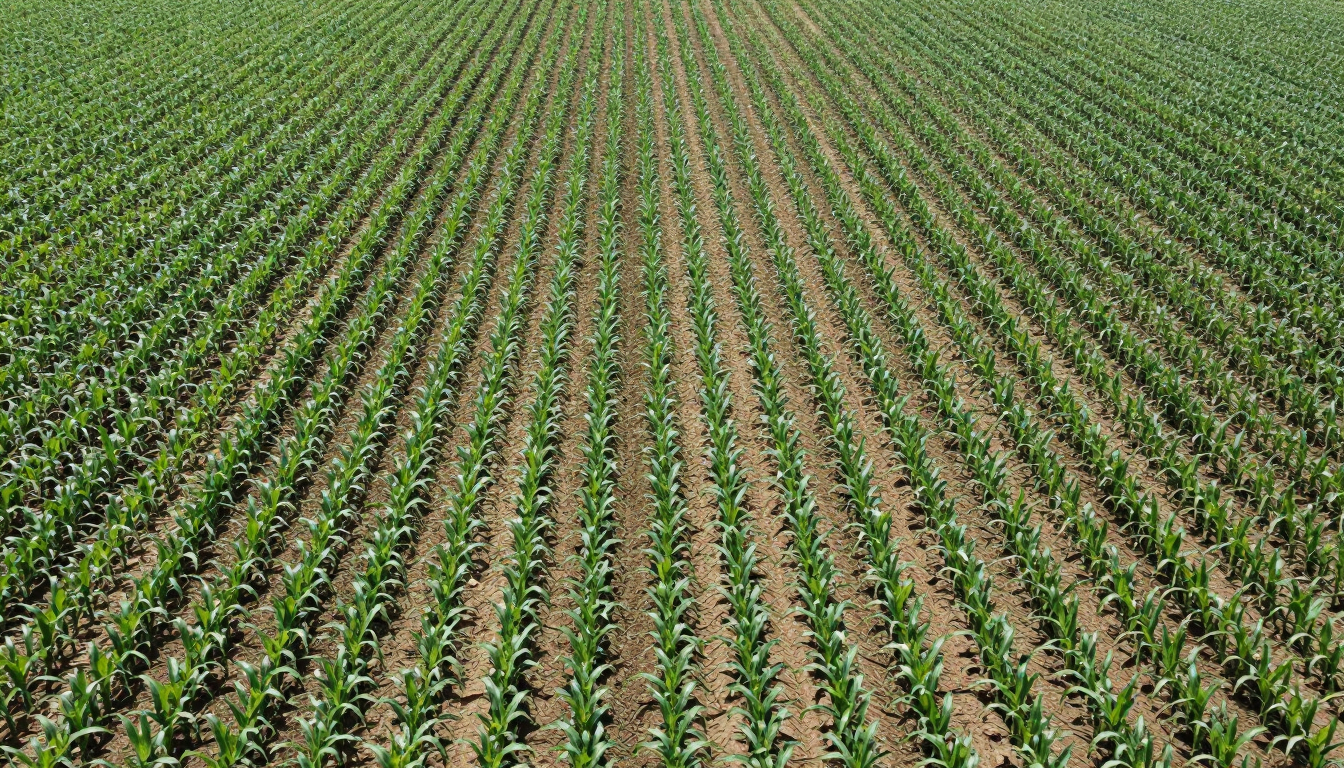
How to Calculate Plant Population per Acre or Hectare
Master plant population calculation per acre and hectare from row and plant spacing — with formulas, worked examples, and a free calculator for farmers and gardeners.
Updated August 20, 2026 7 min read By CalcWisee Editorial Team
Plant population — the number of plants per unit area — drives crop yield, input planning, and resource use. Whether you farm acres of corn or tend a garden bed, knowing your plant density helps you optimise spacing and predict harvest.
Our free Plant Population Calculator computes plants per acre and per hectare from row and plant spacing in seconds.
Try the [Plant Population Calculator](/biology/plant-population-calculator) — enter row and plant spacing for instant density per acre and hectare.
Try it right here — results update instantly.
What Is Plant Population?
Plant population is the number of individual plants growing in a defined area, typically expressed per acre or per hectare. It depends on two measurements: the distance between rows (row spacing) and the distance between plants within a row (plant spacing).
The Formula
Plants per unit area = area of land ÷ area per plant. The area per plant equals row spacing × plant spacing (in consistent units).
For acres (43,560 ft²): Plants per acre = 43,560 ÷ (row spacing in ft × plant spacing in ft).
For hectares (10,000 m²): Plants per hectare = 10,000 ÷ (row spacing in m × plant spacing in m).
Worked Example
Corn planted with 30-inch row spacing and 8-inch plant spacing:
Row spacing = 30 in ÷ 12 = 2.5 ft
Plant spacing = 8 in ÷ 12 = 0.667 ft
Area per plant = 2.5 × 0.667 = 1.667 ft²
Plants per acre = 43,560 ÷ 1.667 ≈ 26,135 plants
Metric Example
Soybeans with 0.5 m row spacing and 0.05 m plant spacing:
Area per plant = 0.5 × 0.05 = 0.025 m²
Plants per hectare = 10,000 ÷ 0.025 = 400,000 plants
Why Plant Population Matters
Yield — too few plants underuse land; too many compete for light, water, and nutrients.
Input planning — seed, fertilizer, and water needs scale with plant count.
Canopy closure — optimal density shades out weeds and conserves soil moisture.
Disease management — overcrowding raises humidity and disease risk.
Factors That Affect Optimal Spacing
Crop type — cereals, legumes, and root crops each have different density optima.
Plant population is a simple but powerful agronomy metric — land area divided by area per plant. The Plant Population Calculator handles the unit conversions and gives you per-acre and per-hectare density instantly.
Important Disclaimer
This calculator provides general estimates. Optimal plant density varies by crop, soil, climate, and management. Consult local agronomy extension services for region-specific recommendations.
CalcWisee is an independent site founded by Ayman. Every calculator is built from a published formula or official definition, tested against hand-worked examples before it goes live, and corrected promptly when a reader reports an issue to ayman@calcwisee.com.
Expertise: Financial mathematics, Health and fitness formulas, Applied mathematics, Unit conversion standards