Unit Converter
Convert length, weight, temperature, area, volume, time, speed, pressure, energy, and power with exact SI factors, live tables, formulas, and swap/copy/share tools.
Reviewed October 7, 2026 Runs in your browser — inputs are never stored
Category
1 Meter = 3.28084 Foot
- Start: 1 m
- To base (metre): 1 × 1 = 1
- To Foot: 1 ÷ 0.3048 = 3.28084 ft
Conversion table — 1 m equals:
| Unit | Symbol | Value |
|---|---|---|
| Millimeter | mm | 1,000 |
| Centimeter | cm | 100 |
| Meterselected | m | 1 |
| Kilometer | km | 0.001 |
| Inch | in | 39.370079 |
| Footselected | ft | 3.28084 |
| Yard | yd | 1.093613 |
| Mile | mi | 0.00062137119 |
Learn more about unit conversions — read our Unit Converter guide with formulas, metric vs imperial tips, and practical examples.
This tool provides general unit conversions for everyday and educational use. For regulated, legal, or scientific applications, verify conversion factors against the applicable official standard.
About the Unit Converter
A unit converter is an essential everyday tool that translates measurements between metric and imperial systems across length, weight, temperature, area, volume, time, speed, pressure, energy, and power. It is built for students tackling science homework, engineers reviewing specifications, travellers making sense of foreign measurements, cooks adapting international recipes, and professionals who work with mixed unit systems. Instead of looking up conversion factors and multiplying by hand, you select a category, choose the source and target units, and enter a value to receive an exact result instantly. The converter uses internationally defined SI factors, handles temperature offset-based scales correctly, and displays a live conversion table plus the formula and step-by-step working for every calculation. Swap, copy, and share actions make it easy to compare values or send results to colleagues. By removing the manual arithmetic that so often introduces errors, the tool saves time and improves confidence for anyone who regularly moves between units in study, work, or daily life.
How to use it
- 1Pick a measurement category (length, weight, temperature, etc.).
- 2Select the from-unit and to-unit.
- 3Enter the value to convert.
- 4Read the result, formula, and live table of related units.
- 5Use swap to reverse direction without retyping the number.
Worked example
5 miles to kilometres → 8.04672 km using the exact international mile factor. For temperature, 25 °C → 77 °F (offset formula, not a simple ratio). Mixing ratio-based and offset-based conversions is a frequent homework mistake the tool avoids.
Who it is for
Students tackling science homework, engineers reviewing specifications, travellers making sense of foreign measurements, cooks adapting international recipes, and professionals who work across metric and imperial systems.
Why it helps
Unit mistakes are among the most common and costly errors in cooking, shipping, construction, and science; a verified conversion through exact SI factors prevents misplaced decimals and wrong-system disasters.
Tips for better results
- Pick your target unit system before converting so you round only once, at the final answer.
- Watch for same-named units that differ by system — US gallons (3.785 L) vs Imperial gallons (4.546 L) trip up many cooks.
- Use the live conversion table to see your value across every unit in the category at once, which catches magnitude errors.
- For regulated or lab work, keep two extra decimal places through intermediate steps and round only the final result.
Common mistakes to avoid
- Confusing US and Imperial units with the same name (gallons, pints, fluid ounces differ significantly).
- Rounding each conversion step in a chain, which compounds small errors into a large final discrepancy.
- Mixing mass (weight) units with volume units — 1 cup of flour weighs far less than 1 cup of water.
- Using an outdated or rounded conversion factor instead of the internationally defined SI value.
Frequently asked questions
A:Linear units use internationally defined SI conversion factors (for example 1 in = 0.0254 m exactly). Temperature uses the standard offset formulas with 273.15 between Celsius and Kelvin.
A:Yes for most categories (for example temperature differences or directed lengths). Kelvin inputs below zero are rejected because absolute zero is 0 K.
A:1 US gallon = 3.785411784 L exactly. 1 Imperial gallon = 4.54609 L. Always check which system a recipe or fuel figure uses.
A:°F = (°C × 9/5) + 32. Example: 20 °C = 68 °F. Use the Temperature category for instant results.
A:This converter uses mechanical horsepower (≈ 745.7 W). Metric horsepower (≈ 735.5 W) is slightly different — verify which definition your equipment uses.
Reviewed for accuracy · Last updated October 7, 2026
Conversion factors are based on internationally defined SI units and standard metric/imperial equivalence tables.
CalcWisee Editorial Team
Calculator development and formula review
CalcWisee is an independent site founded by Ayman. Every calculator is built from a published formula or official definition, tested against hand-worked examples before it goes live, and corrected promptly when a reader reports an issue to ayman@calcwisee.com.
Expertise: Financial mathematics, Health and fitness formulas, Applied mathematics, Unit conversion standards
References & sources
Related guides
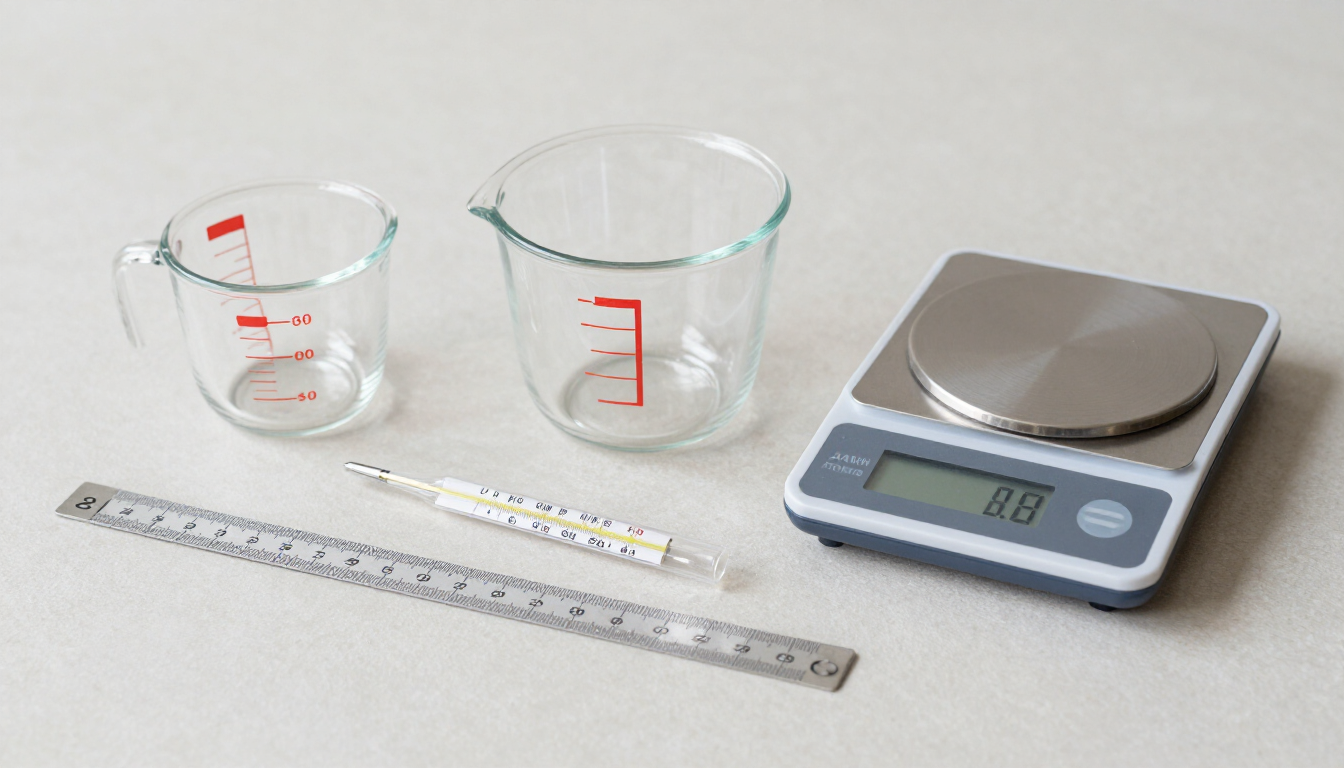
Common Unit Conversion Formulas Made Simple
Length, weight, temperature, and volume conversions explained with exact factors, worked examples, and common mistakes to avoid.
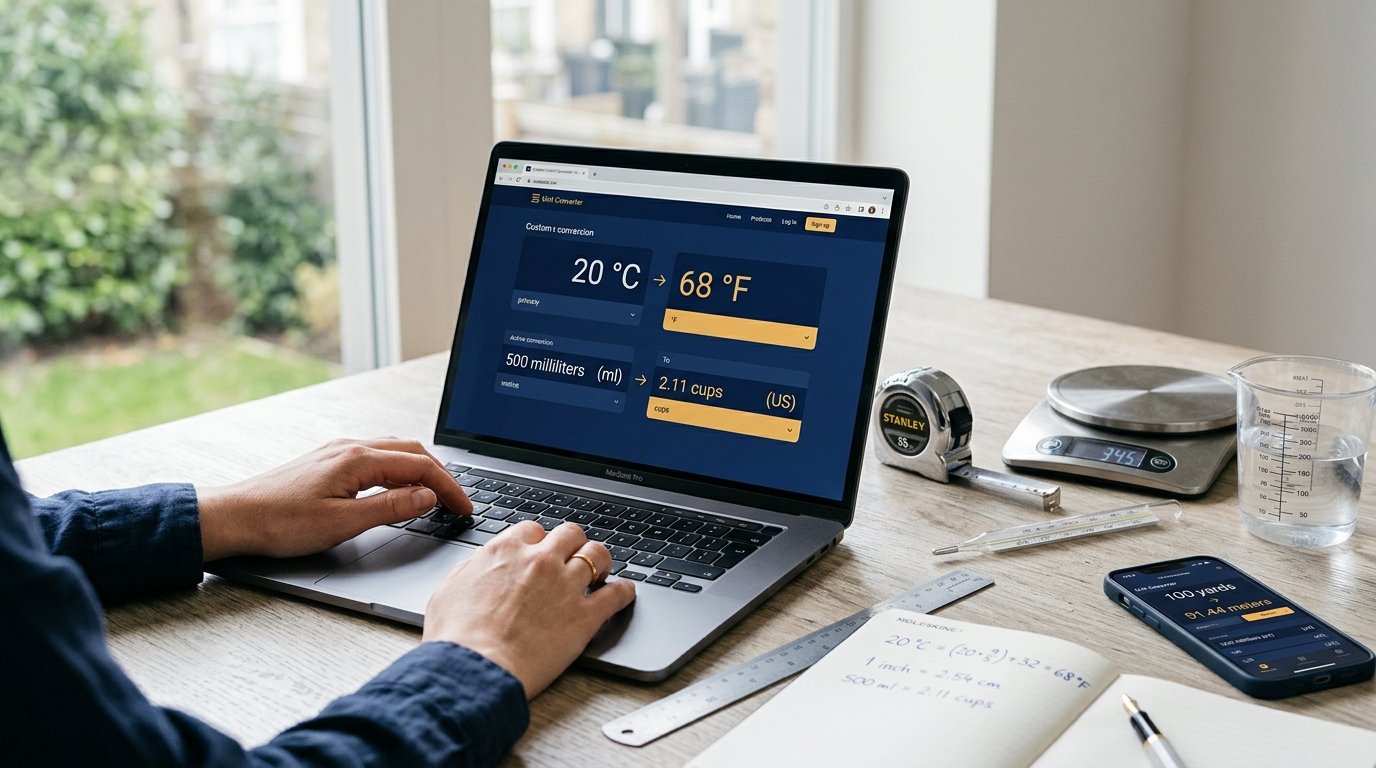
Unit Converter: The Ultimate Guide to Everyday Conversions
Master everyday metric and imperial conversions — length, mass, temperature, area, volume, speed, time, pressure, energy, and power — with clear formulas and a free multi-category Unit Converter.
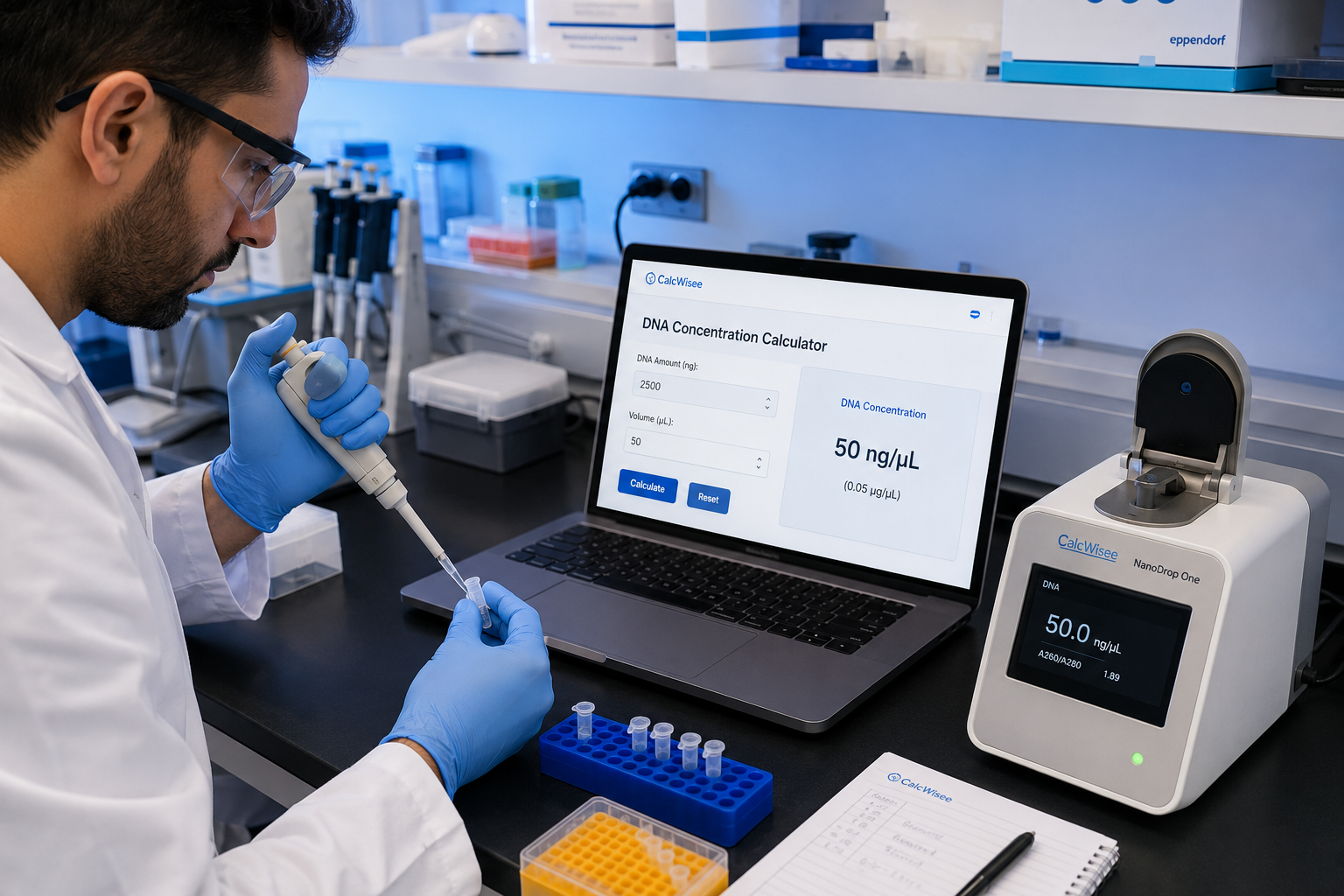
DNA Concentration Calculator: How to Calculate DNA Concentration
Calculate DNA concentration from amount and volume or A260, prepare dilutions, find total DNA, and avoid common lab unit mistakes — with a free multi-mode calculator.