Protein Concentration Calculator
Calculate protein concentration from mass and volume, A280 Beer–Lambert absorbance, C₁V₁ dilutions, or a linear Bradford/BCA/Lowry standard curve — with clear units and validation.
Reviewed October 7, 2026 Runs in your browser — inputs are never stored
Protein Concentration Calculator
Mass/volume · A280 · dilution · Bradford/BCA/Lowry curve
Result
3 mg/mL
(3,000 µg/mL · 3 g/L)
C = m ÷ V. Keep mass and volume units consistent (converted internally to mg and mL).
Read the Protein Concentration Calculator guide
Educational laboratory calculation aid only. A280 extinction coefficients and colorimetric assays are method-dependent. Results do not replace validated SOPs, instrument calibration, kit instructions, or professional laboratory judgment.
This tool provides general educational estimates only and is not veterinary, medical, or professional advice. Animal gestation, toxicity, dosage, and quality-of-life results are based on average values and vary by individual. Always consult a qualified veterinarian or professional before making decisions based on these results.
About the Protein Concentration Calculator
The Protein Concentration Calculator on CalcWisee helps researchers, students, and laboratory professionals relate protein mass and volume, A280 absorbance with extinction coefficients, stock dilutions, and linear standard curves used in Bradford, BCA, and Lowry assays. Choose mass ÷ volume for known mass and volume, Beer–Lambert A280 with ε in (mg/mL)⁻¹cm⁻¹ or molar units plus molecular weight, C₁V₁ = C₂V₂ for preparing working solutions, or standard-curve mode when absorbance is read against BSA (or other) standards. Results emphasize mg/mL, µg/mL, and g/L with decimals and scientific notation, clear validation, and no NaN or Infinity outputs. Calculations run locally in your browser. Extinction coefficients and dye-binding responses are protein- and buffer-dependent — confirm critical work against calibrated instruments and validated laboratory protocols.
How to use it
- 1Read the field labels and units before typing any numbers.
- 2Enter each required input using the same unit system throughout.
- 3Press Calculate and review every row in the result panel.
- 4Compare the output with the formula and example on this page.
- 5Reset and change one variable at a time to explore sensitivity.
Worked example
A280 = 0.541, ε = 1.0 (mg/mL)⁻¹cm⁻¹, DF = 10, l = 1 cm → c = (0.541 × 10)/(1 × 1) = 5.41 mg/mL.
How it works
Formula
C = m/V; c = (A₂₈₀ × DF)/(ε × l); C₁V₁ = C₂V₂; c = (A − b)/m × DF
Worked numbers
A280 = 0.541, ε = 1.0 (mg/mL)⁻¹cm⁻¹, DF = 10, l = 1 cm → c = (0.541 × 10)/(1 × 1) = 5.41 mg/mL.
Tips for better results
- Match organism, life stage, and unit assumptions to your real scenario.
- Write dilution factors and blanks next to spectrophotometer-style inputs.
- Prefer primary measurements over rough guesses when precision matters.
- Log the formula version or page date when you paste results into a report.
Common mistakes to avoid
- Forgetting dilution factors or blank corrections in concentration work.
- Applying human reference ranges to other species without adjustment.
- Mixing µL with mL (or g with mg) on volume and mass fields.
- Treating an educational estimate as veterinary or clinical advice.
Frequently asked questions
A:Use C = m ÷ V. For example, 12 mg protein in 4 mL is 3 mg/mL. Convert units so mass and volume are consistent.
A:A = ε × c × l, so c = (A280 × dilution factor) ÷ (ε × path length). Use protein-specific ε when known; 1.0 (mg/mL)⁻¹cm⁻¹ is only a rough mixed-protein approximation.
A:Fit a linear standard curve A = m·c + b from known standards, then c = (A − b) ÷ m and multiply by the sample dilution factor. Units match your standards (often µg/mL).
A:Prefer the sequence- or literature-derived coefficient for your protein. For molar ε (M⁻¹cm⁻¹), also enter molecular weight so the tool can report mg/mL.
A:Tryptophan and tyrosine (and disulfide bonds to a lesser extent) absorb near 280 nm, giving a convenient UV signal for many purified proteins.
A:No. Treat outputs as educational estimates. Follow calibrated instruments, kit SOPs, and institutional methods for research or regulated work.
Reviewed for accuracy · Last updated October 7, 2026
Formulas follow published molecular biology, genetics, veterinary, agronomy, and forestry references — including Beer–Lambert DNA/protein quantification, Mendelian inheritance, AAHA/AAFCO nutrition guidelines, USDA grazing and crop standards, and forestry measurement conventions.
CalcWisee Editorial Team
Calculator development and formula review
CalcWisee is an independent site founded by Ayman. Every calculator is built from a published formula or official definition, tested against hand-worked examples before it goes live, and corrected promptly when a reader reports an issue to ayman@calcwisee.com.
Expertise: Financial mathematics, Health and fitness formulas, Applied mathematics, Unit conversion standards
References & sources
Related guides
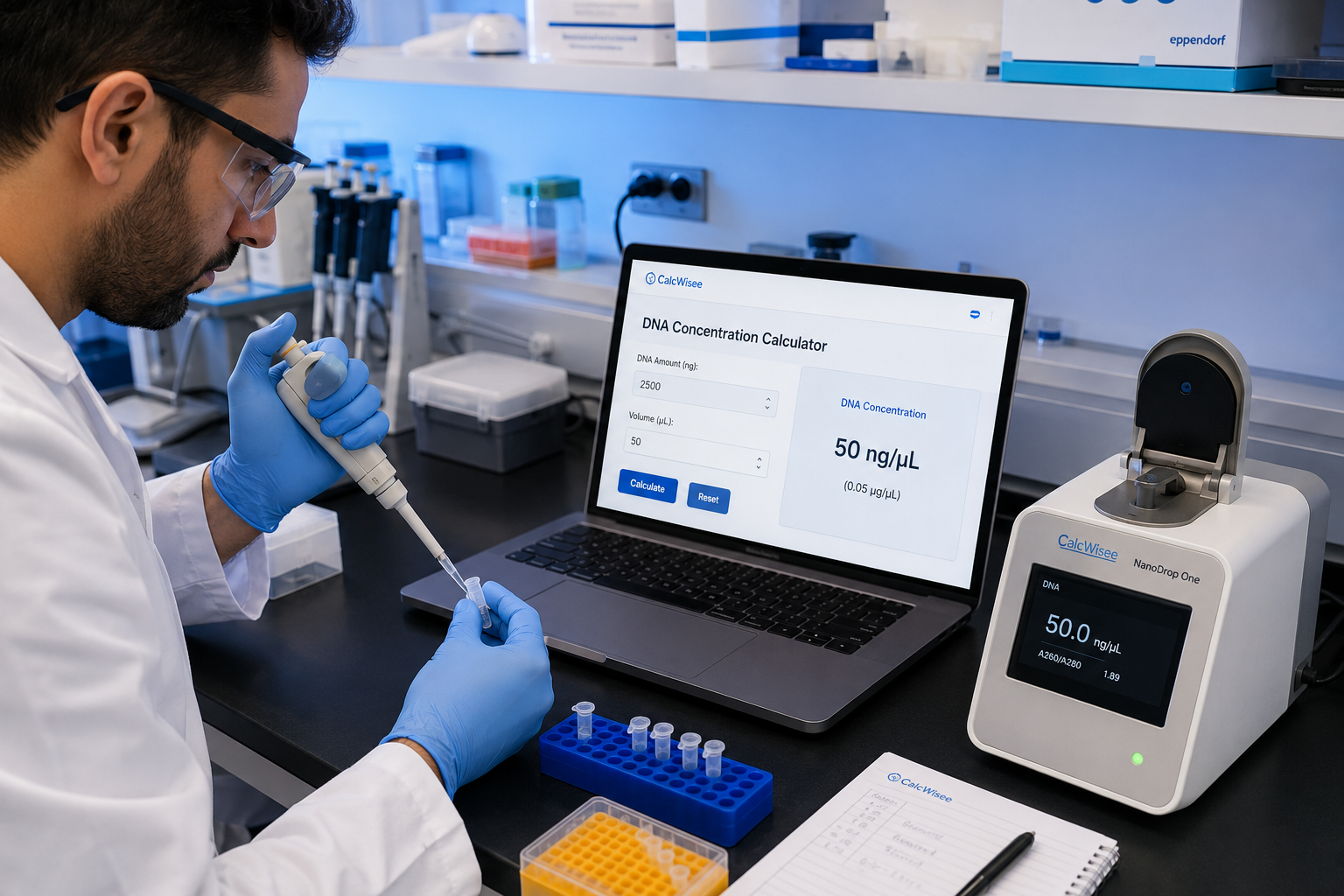
DNA Concentration Calculator: How to Calculate DNA Concentration
Calculate DNA concentration from amount and volume or A260, prepare dilutions, find total DNA, and avoid common lab unit mistakes — with a free multi-mode calculator.
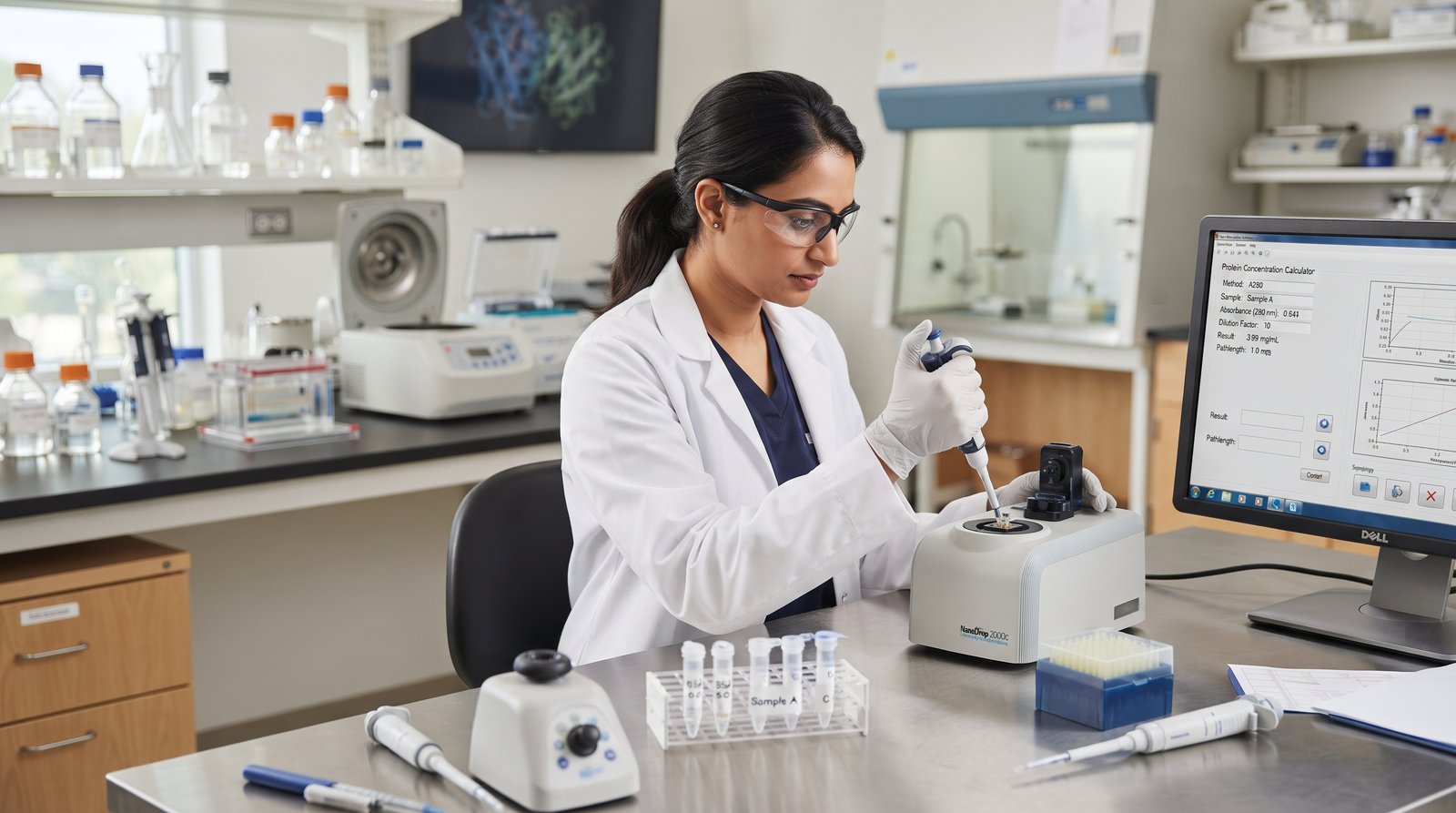
Protein Concentration Calculator: Methods, Formula & Examples
Calculate protein concentration from mass and volume, A280 absorbance, C1V1 dilutions, or linear standard curves used in Bradford, BCA, and Lowry assays — with a free multi-mode calculator.

How Does a Punnett Square Work? A Complete Guide to Genetic Crosses
Understand how Punnett squares predict offspring genotypes and phenotype ratios for monohybrid, dihybrid, and trihybrid crosses — with clear examples, formulas, and a free calculator.